FreshStaff

Automation

Automation that handles the repetitive coordination work across recruiting and onboarding, so your team spends its time on people, not busywork.
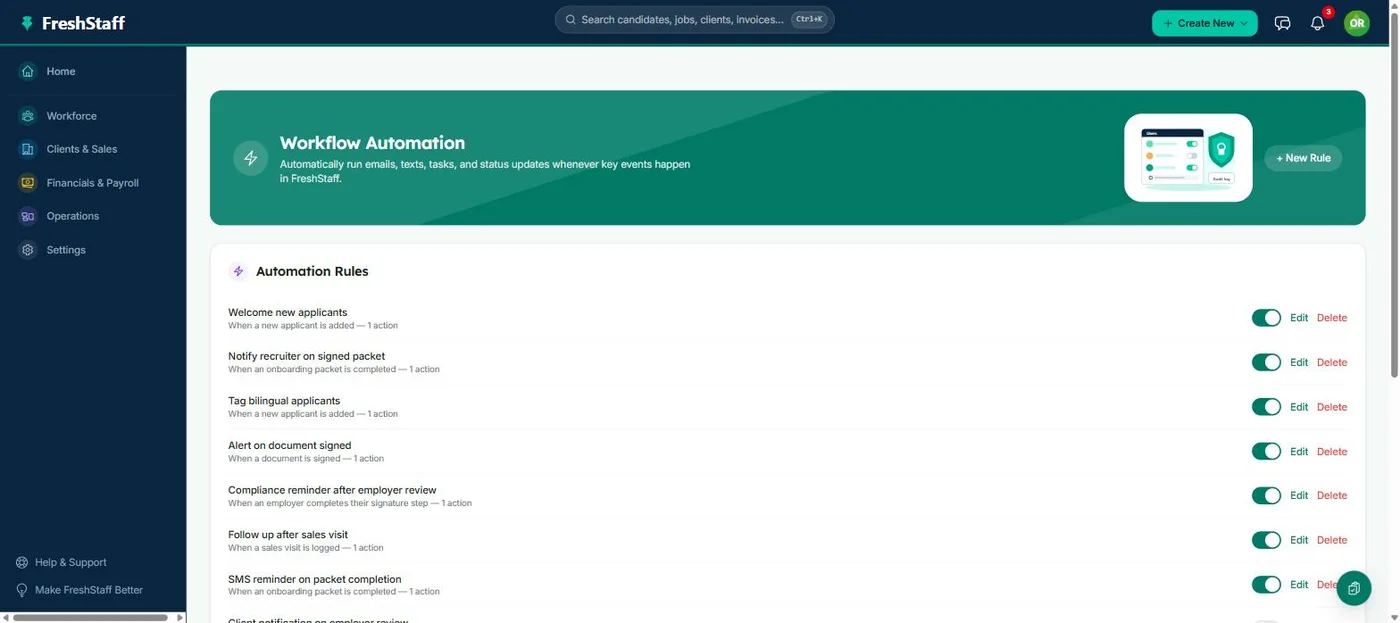
FreshStaff Automation: the Workflow Automation rule list.

In short

FreshStaff automation lets staffing teams build if this then that rules. A new applicant, a signed packet, or a completed sales visit can trigger emails, texts, status updates, and recruiter notifications automatically.

automation rulestriggersactionsworkflow automationrecruiter notifications

Every staffing placement involves dozens of small, repetitive steps that don't need a person's judgment: a reminder email, a status update, a notification that a document got signed. FreshStaff's automation module lets you define rules, a trigger and one or more actions, so those steps happen on their own the moment the event occurs, instead of depending on a recruiter remembering to do them by hand.

Why staffing teams need it

A recruiter's day is supposed to be spent building relationships with candidates and clients, not sending the same reminder email for the fortieth time this week. Every manual, judgment-free task that a system could be doing automatically is time that doesn't scale as a staffing agency grows its placement volume.

This is especially true during growth spurts, when placement volume rises faster than headcount can follow. A team that's automated the repetitive parts of the workflow absorbs that growth without needing more people to keep up. A team still doing it all by hand simply runs out of hours in the day.

How it works

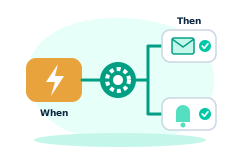
Automation rules are built from two parts. A trigger, the real event in the system, like a new applicant being created or a document packet being completed, and one or more actions, send an email, send a text, notify a recruiter, update an applicant's status, or schedule a follow-up. Rules can be scoped with simple conditions, turned on or off individually, and every run gets logged so a rule's history is always there to check.

A single trigger can carry multiple actions, so one real event, a signed onboarding packet, say, can notify a recruiter, update the candidate's status, and send a confirmation text, all at once, from one rule instead of three separate manual steps. Rules you don't need right now can be turned off without being deleted, so your automation library can grow over time without cluttering what's actually active.

How it compares to old school ATS tools

Old ATS platforms that offer automation at all tend to bolt it on as a rigid, vendor-configured feature that needs a support ticket to change. FreshStaff's automation rules are self-service. Any admin can build, test, and toggle a rule directly, with the same trigger and action model used the same way across the whole platform, instead of a different mechanism in every module.

That consistency matters more than it sounds. An admin who's learned how to build one rule already knows how to build every other rule, because triggers and actions work the same way everywhere. A platform where automation behaves differently in each module means relearning the mechanism every time, and that's exactly the kind of friction that keeps automation from actually getting used.

Speed, accuracy, and compliance

Automated actions happen the moment their trigger fires, not whenever a person next checks their task list. That means a compliance reminder or a client notification goes out reliably every time, instead of depending on someone remembering. Cutting out manual, repetitive steps also cuts out the errors that come from doing the same task by hand hundreds of times a week.

Reliability adds up in a way that's easy to underestimate. A reminder that fires correctly 100% of the time, even if it seems like a small thing, is worth more over a year than a process that's 95% reliable because a person is doing it by hand. The 5% that falls through the cracks is usually exactly the case that turns into a real problem later.

How it connects to the rest of FreshStaff

Automation sits across the whole platform instead of inside one module. Its triggers fire from Onboarding (packet completion, document signing), the applicant pipeline (new applicant created), and Sales (visit logged), and its actions reach into Notifications, Email, and SMS. The Analytics module's automation activity dashboard shows how often each rule fires.

This is on purpose. Automation is meant to be the connective tissue between modules that would otherwise need a person to notice one thing happened and go tell another system about it by hand. A signed document in Onboarding automatically becomes a status update in the pipeline and a notification in Admin HQ's activity feed, without anyone bridging that gap themselves.

How It Works

  1. 1

    An admin creates a new rule and gives it a name.

  2. 2

    The admin picks a trigger, the real event that should start the rule, like a new applicant being created.

  3. 3

    The admin adds one or more actions: send an email, notify a recruiter, update status, or schedule a follow-up.

  4. 4

    The rule gets turned on, and from that point it runs automatically every time its trigger happens.

  5. 5

    Every run gets recorded in the execution log, so the rule's behavior is fully auditable later.

Why It Matters

Automation is what lets a staffing agency add placement volume without adding proportional headcount. The repetitive coordination work scales on its own instead of needing more people to do the same manual steps more times.

It also closes a common compliance gap. Reminders and notifications that used to depend on a person remembering now happen reliably every time, which matters most exactly when a team is busiest and least likely to catch a manual task slipping through.

Automation in FreshStaff

How Automation Compares

How Automation compares to legacy ATS platforms and manual processes
CapabilityFreshStaffLegacy ATSManual Processes
Automation coverageRecruiting through onboardingLimited, vendor-configuredNone
SetupSelf-service rule builderSupport ticket requiredN/A
ReliabilityFires on every trigger, loggedVaries by vendorDepends on memory
AuditabilityFull execution logLimited or noneNone

Explore More Features

Client Intelligence Hub

GPS auto-capture, territory heatmaps, route planning, and an AI sales assistant for field reps.

Universal Command Center

A Cmd+K command bar for instant navigation, one-step actions, and quick status queries.

Native Payroll & Compliance Engine

Federal/state withholding, FICA, SUTA/FUTA, ACA offer and safe-harbor codes, and 1095-C generation, built in.

Territory Intelligence

Heatmaps, category layers, clustering, and shared-building grouping on a live territory map.

AI Visit Planning

Scores nearby clients and builds an optimized route from your current location.

Daily Route Auto-Generator

One click, no setup. Today's route, GPS based, with today's visits already excluded.

Category-Based Routing

Restrict a route to just Healthcare, Industrial, or Professional Services leads.

Lead Scoring Engine

Ranks nearby companies by category, confidence, proximity, and shared-building context.

Route Optimization

Free, offline route reordering. Haversine distance and 2-opt, no routing API.

Onboarding

Guided digital onboarding from offer to first shift.

Analytics

Real-time dashboards for fill rate, compliance, and velocity.

Migration Engine

Guided, field-mapped migration off legacy ATS platforms.

Integrations

Connected payroll, background check, and timekeeping providers.

Admin HQ

Tenant-wide users, permissions, and system oversight.

Packet Builder

Reusable document packets for every placement type.

Document Builder

Upload, map, and publish fillable onboarding documents.

Compliance

I-9, W-4, and E-Verify tracking that stays audit-ready.

Client Portal

Client-facing job orders, approvals, and placement visibility.

Kiosk Mode

Walk-in applicant intake on a shared front-desk device.

System Health

Job runner, queue, and error visibility for system admins.

Copilot Priorities

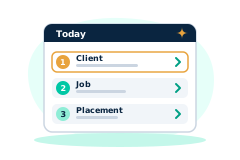
A ranked daily list of what needs attention across clients, jobs, and placements.

Copilot Actions

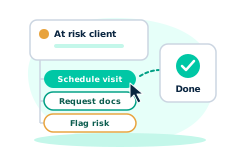
One-click actions attached to every Copilot priority. No separate screen required.

Copilot Conversations

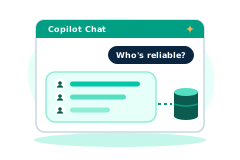
Ask Copilot in plain language and get a real answer from your own data.

Copilot Memory

Copilot remembers what you were just looking at, so follow-ups just work.

Copilot Workflow Builder

Describe a workflow in plain language and Copilot drafts the steps.

Smart Command Bar

One command bar for navigation, search, and natural-language questions.

Copilot Voice Input

Speak a command to Copilot instead of typing it.

ATS Intelligence

Watches your ATS around the clock, catches problems automatically, and fixes them within limits you set.

Reliability & Availability Intelligence

Persistent reliability trend history and 14-day availability forecasting, computed nightly and fed straight into Copilot.

Worker Reliability

A weighted attendance-risk score for every worker, computed from real placement history.

Worker Availability

See which workers are actually free today before you ever open a job order.

Compliance & Onboarding Packets

Reusable document packets, I-9/W-4 tracking, and client-specific onboarding rules.

Safety & Job-Site Readiness

Digital safety inspections and job equipment tracking, gated before dispatch.

Training & Credential Tracking

A built-in candidate LMS and credential repository, tracked to expiration.

Sales Visit & CRM Intelligence

GPS-logged sales visits and Google Places business auto-enrichment.

Client Credit Management

Real-time client credit limits, applications, and exposure alerts.

Time Tracking & Workforce Hours

Mobile time entry and approval workflows that flow into native payroll.

AI Theme Designer

Generate, edit, and preview a fully branded dashboard theme, with built-in AA contrast checking.

Theme Pack Marketplace

Install official and community theme packs, rated and curated, with one-click rollback.

AI Brand Evolution

Evolve, mutate, and merge your theme pack over time, with full version history and style trends from other agencies.